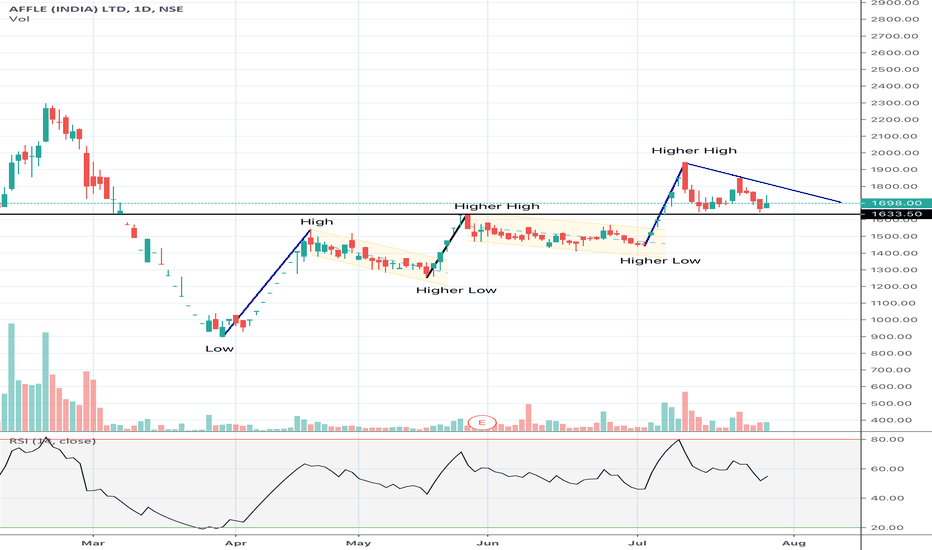
Affle India Stock Price. Affle (india) up by 0.43% is trading at ₹ 1,180.10 today. See affle (india) ltd stock price prediction for 1 year made by analysts and compare it to price changes over time to develop a better trading strategy.
AFFLE Stock Price and Chart — NSEAFFLE — TradingView — India from in.tradingview.com The Different Types and Types of Stocks
Stock is an ownership unit in the corporate world. A small portion of the total company shares could be represented by a single stock share. You can either buy stock via an investment company, or buy it on behalf of the company. Stocks are subject to fluctuation and are used for a variety of purposes. Certain stocks are cyclical while others aren't.
Common stocks
Common stocks is a form of equity ownership in a company. These securities are usually issued as voting shares or ordinary shares. Ordinary shares, sometimes referred to as equity shares are often used outside of the United States. Common terms used for equity shares are also employed by Commonwealth nations. They are the most basic form of corporate equity ownership and are the most commonly held form of stock.
Common stocks are very like preferred stocks. They differ in the sense that common shares have the right to vote, while preferred stock cannot. The preferred stocks pay lower dividend payouts, but don't give shareholders the right of voting. In the event that rates increase, they depreciate. But, rates of interest can be lowered and rise in value.
Common stocks have more likelihood of appreciation than other kinds of investments. They do not have fixed rates of return, and are cheaper than debt instruments. Common stocks unlike debt instruments, are not required to make payments for interest. Investing in common stocks is a fantastic option to reap the benefits of increased profits and share in the success of a company.
Preferred stocks
They pay higher dividend yields than ordinary stocks. These are investments that are not without risk. Therefore, it is important to diversify your portfolio with different types of securities. To achieve this, you can purchase preferred stocks via ETFs/mutual funds.
The majority of preferred stocks do not have a expiration date. However they can be called and redeemed by the firm that issued them. The date of call in most cases is five years from the date of the issuance. This type of investment combines the advantages of the bonds and stocks. The best stocks are comparable to bonds, and pay dividends each month. They are also subject to set payment conditions.
Preferred stocks also have the advantage of offering companies an alternative source for financing. One example is pension-led funding. Certain companies can postpone dividend payments without affecting their credit scores. This gives companies more flexibility and lets them pay dividends as soon as they have sufficient cash. But, these stocks have a risk of interest rate.
Stocks that don't enter an economic cycle
A stock that is not cyclical means it does not experience significant changes in its value because of economic developments. They are typically produced by industries that provide items as well as services that customers frequently need. Their value will increase as time passes by due to this. Tyson Foods sells a wide variety of meats. Investors will find these products to be a good investment because they are in high demand all year. Another example of a non-cyclical stock is the utility companies. These companies are predictable and stable, and have a larger turnover in shares.
Customer trust is another important factor to consider when investing in non-cyclical stock. High customer satisfaction rates are usually the most beneficial option for investors. Although many companies are highly rated by their customers but this feedback can be incorrect and the service could be subpar. Therefore, it is crucial to look for businesses that provide customer service and satisfaction.
Non-cyclical stocks are often the best investment option for people who do not want to be subject to unpredictable economic cycles. While the prices of stocks can fluctuate, they are more profitable than other types of stock and the industries they are part of. They are often called defensive stocks because they protect investors from negative effects of the economic environment. Non-cyclical stocks can also diversify portfolios, allowing you to make steady profit regardless of what the economy is doing.
IPOs
IPOs are stock offerings where companies issue shares to raise funds. Investors can access the shares on a specific time. Investors who wish to purchase these shares must fill out an application form to be a part of the IPO. The company determines how much cash they will need and distributes the shares according to that.
IPOs are a complex investment which requires attention to every aspect. Before you make a choice it is important to be aware of the management style of the company as well as the credibility of the underwriters. Large investment banks are usually in favor of successful IPOs. There are also risks involved when you invest in IPOs.
A business can raise huge amounts of capital by an IPO. It allows financial statements to be more clear. This boosts the credibility of the company and gives lenders greater confidence. This could result in improved terms for borrowing. Another advantage of an IPO is that it rewards those who own equity in the company. The IPO will close and early investors can then trade their shares on another market, which will stabilize the value of the stock.
An IPO will require that a company meet the listing requirements for the SEC or the stock exchange to raise capital. After completing this stage, it is able to start marketing the IPO. The final stage of underwriting involves the establishment of a syndicate made up of investment banks and broker-dealers that can purchase shares.
Classification of companies
There are a variety of ways to categorize publicly-traded firms. One method is to base it on their share price. There are two options for shares: common or preferred. The distinction between these two types of shares is the number of voting rights they each are granted. The former enables shareholders to vote at company-wide meetings as well as allowing shareholders to vote on certain aspects of the operations of the company.
Another option is to organize companies according to industry. This is a good way to find the best opportunities within specific industries and sectors. There are many variables that affect the likelihood of a company belonging to an industry or sector. A good example is a decline in stock price that could influence the stock prices of companies within its sector.
The Global Industry Classification Standard (GICS) and the International Classification Benchmark (ICB) classification systems classify companies according to the items they manufacture as well as the services they provide. Companies in the energy sector for example, are part of the energy industry category. Oil and Gas companies are included under the oil and drilling sub-industries.
Common stock's voting rights
A lot of discussions have occurred over the years about voting rights for common stock. There are many reasons a company may decide to give shareholders the right vote. The debate has led to several bills to be introduced both in the House of Representatives and the Senate.
The voting rights of a company's common stock is determined by the number of shares outstanding. If, for instance, the company is able to count 100 million shares of shares outstanding that means that a majority of shares will be entitled to one vote. However, if the company has a larger amount of shares than its authorized number, then the voting capacity of each class is greater. Therefore, companies may issue additional shares.
Common stock may also come with rights of preemption that permit the owner of a single share to retain a percentage of the company's stock. These rights are crucial because a business could issue more shares or shareholders might wish to purchase new shares to keep their share of ownership. Common stock isn't a guarantee of dividends, and corporations are not obliged by shareholders to make dividend payments.
Stocks investment
Stocks can help you earn higher yields on your investment than you would in a savings account. If a company is successful, stocks allow you to buy shares of the company. Stocks also can yield substantial profits. They also let you make money. Stocks allow you to sell your shares at a greater market value, but still make the same amount of capital you initially invested.
Investment in stocks comes with risks. Your risk tolerance and your time frame will help you determine the best risk to take on. The most aggressive investors seek to maximize returns at all expense, while conservative investors strive to safeguard their capital. Moderate investors are looking for a steady, high yield over a long period of time but aren't willing to risk all of their money. A conservative investing strategy can still lead to losses. Therefore, it is important to establish your comfort level prior to making a decision to invest.
Once you've established your risk tolerance, you can put money into small amounts. You can also look into different brokers to find one that is right for you. A reliable discount broker must offer tools and educational materials. Some may even offer robo advisory services to help you make informed decision. Discount brokers can also provide mobile apps, with minimal deposit requirements. But, it is important to confirm the charges and conditions of each broker.
Find the latest affle (india) limited (affle.ns) stock quote, history, news and other vital information to help you with your stock trading and investing. Affle (india) share price live nse/bse updates on the economic times. Affle financial results, affle shareholding, affle annual reports, affle pledge, affle insider trading and.
The Operating Margin Of Affle (India) For The Current Financial Year Is 12.96 %.
Looks bullish for short term on daily charts. Nse:affle broke out of a cup and handle pattern and gave a retest. Stock analysis for affle india ltd (affle:natl india) including stock price, stock chart, company news, key statistics, fundamentals and company profile.
Affle India Cup And Handle Trade 🎯40%.
Find the latest affle (india) limited (affle.ns) stock quote, history, news and other vital information to help you with your stock trading and investing. Summary of all time highs, changes and price drops for affle (india) historical stock prices; Captures the information on price and volume for a user defined time interval.
102 Rows Discover Historical Prices For Affle.ns Stock On Yahoo Finance.
Click now to get real time price along with research reports, historical charts, pe ratio & latest news! Today stock price, live bse/nse share value, target price, market capitalization, financial & fundamentals. Affle (affle (india)) is up by 0.00% & is trading at ₹ 1,180.10 today.
Affle (india) up by 0.43% is trading at ₹ 1,180.10 today. Find the latest affle (india) limited (affle.ns) stock quote, history, news and other vital information to help you with your stock trading and investing. See affle (india) ltd stock price prediction for 1 year made by analysts and compare it to price changes over time to develop a better trading strategy.
Buy Affle @ Rs 1250 Targets Expected Are Rs.
Price made a green candle and is back to breakout levels. It also contains the live stock price and volume, 52 week high. Buy or invest in affle (india) ltd.

Post a Comment for "Affle India Stock Price"