What Is The Stock Price Of Tpb. When did tpb acquisition co. Find the latest tpb acquisition corporation i (tpba) stock quote, history, news and other vital information to help you with your stock trading and investing.
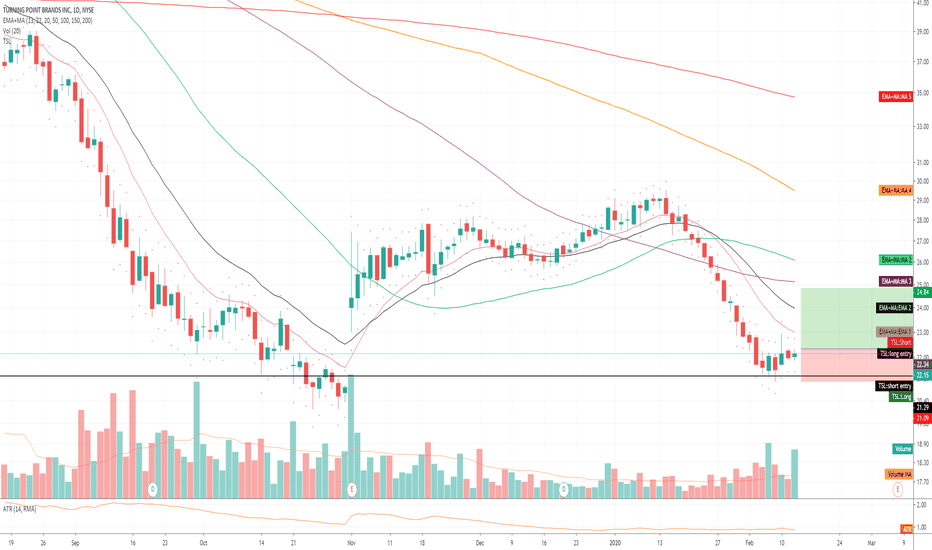
TPB Stock Price and Chart — NYSETPB — TradingView from www.tradingview.com The Different Stock Types
Stock is a type of unit which represents ownership in an organization. A fraction of total corporation shares could be represented by one stock share. Stock can be purchased through an investor company or through your own behalf. Stocks are subject to fluctuation and are used for a variety of purposes. Some stocks are cyclical and others aren't.
Common stocks
Common stocks are a form of corporate equity ownership. These securities can be offered as voting shares or regular shares. Outside the United States, ordinary shares are often called equity shares. In the context of equity shares within Commonwealth territories, the term "ordinary shares" are also utilized. They are the most basic form of equity ownership for corporations and are the most popular type of stock.
Common stock has many similarities with preferred stocks. Common shares can vote, while preferred stocks aren't. While preferred shares pay less dividends, they don't allow shareholders to vote. They are likely to decrease in value when interest rates increase. They'll increase in value if interest rates drop.
Common stocks also have a greater likelihood of growth than other forms of investments. They are more affordable than debt instruments, and they have variable rates of return. Common stocks are free from interest charges, which is a big advantage against debt instruments. Investing in common stocks is a great option to reap the benefits of increased profits and contribute to the company's success.
Preferred stocks
Preferred stocks are investments which have higher dividend yields than ordinary stocks. As with all investments there are potential risks. Therefore, it is important to diversify your portfolio by purchasing different types of securities. It is possible to buy preferred stocks through ETFs or mutual fund.
The majority of preferred stocks do not have a maturation date. They can however be redeemed and called by the company that issued them. The call date is usually five years following the date of issue. This investment is a blend of both bonds and stocks. Like a bond, preferred stock pays dividends on a regular basis. They are also subject to specific payment terms.
The advantage of preferred stocks is that they can be utilized to create alternative sources of capital for companies. Another alternative to financing is through pension-led financing. Companies are also able to delay dividends without having to affect their credit ratings. This provides companies with more flexibility and permits them to pay dividends when they have enough cash. These stocks can also be subject to the risk of interest rate.
Non-cyclical stocks
A stock that is not cyclical does not see significant fluctuation in its value as a result of economic developments. These stocks are usually found in industries that manufacture the products or services that consumers want constantly. That's why their value increases in time. Tyson Foods is an example. They offer a range of meats. Consumer demand for these kinds of items is always high making them a great choice for investors. Utility companies are another illustration. These kinds of companies can be predictable and are stable and will increase their share turnover over years.
Customers trust is another important element in non-cyclical shares. Investors should select companies that have a a high rate of customer satisfaction. While some companies may appear to be highly rated but their reviews can be misleading, and customers may have a poor experience. Companies that provide customer service and satisfaction are important.
For those who don't want your investments affected by the unpredictable economic cycle and cyclical stock options, they can be a good option. Although the value of stocks fluctuate, they outperform their industry and other kinds of stocks. These are also referred to as "defensive stocks" as they protect investors from the negative effects of economic uncertainty. Furthermore, non-cyclical securities provide diversification to portfolios and allow you to earn constant profits, regardless of how the economy is performing.
IPOs
An IPO is an offering where a company issue shares to raise capital. These shares will be offered to investors on a specific date. Investors who want to buy these shares must complete an application to participate in the IPO. The company decides on how the required amount of money is needed and then allocates shares according to the amount.
IPOs require careful consideration of particulars. Before making a decision to make an investment in an IPO it is important to carefully consider the management of the company, the quality and details of the underwriters, as well as the specifics of the deal. Large investment banks are usually in favor of successful IPOs. There are , however, risks when investing in IPOs.
An IPO lets a company raise enormous sums of capital. The IPO also makes the company more transparent, thereby increasing its credibility and giving lenders greater confidence in its financial statements. This may result in more favorable terms for borrowing. Another advantage of an IPO is that it rewards those who own shares in the company. Investors who were part of the IPO are now able to sell their shares in the market for secondary shares. This stabilizes the price of shares.
A company must meet the requirements of the SEC's listing requirement in order to qualify to go through an IPO. After completing this stage, it is able to begin marketing the IPO. The last step in underwriting is to form a group of investment banks, broker-dealers, and other financial institutions capable of purchasing the shares.
Classification of businesses
There are many methods to categorize publicly traded companies. The stock of the company is just one way. You can select to have preferred shares or common shares. There is only one difference: in the number of shares that have voting rights. The former lets shareholders vote in company meetings, while shareholders are able to vote on specific aspects.
Another way to categorize companies is by sector. Investors looking to identify the best opportunities within specific industries or segments could benefit from this method. However, there are a variety of factors that impact the possibility of a business belonging to a certain sector. If a company suffers significant declines in its the price of its shares, it might have an impact on the stock prices of other companies within the sector.
Global Industry Classification Standard (GICS) along with the International Classification Benchmarks, categorize companies based their products and/or services. Companies operating in the energy sector including the oil and gas drilling sub-industry are included in this group of industries. Companies in the oil and gas industry are included within the oil and gaz drilling sub-industries.
Common stock's voting rights
Many discussions have taken place over the years about common stock voting rights. There are many different reasons that a company could use to choose to give its shareholders the right to vote. The debate has led to several bills to be introduced in the House of Representatives and the Senate.
The number and value of shares outstanding determine the number of shares that are entitled to vote. A 100 million share company can give you one vote. A company that has more shares than is authorized will have a greater voting power. This means that the company is able to issue more shares.
Preemptive rights can also be obtained when you own common stock. These rights permit the holder to keep a particular percentage of the stock. These rights are essential because a company can issue additional shares and shareholders may want new shares to preserve their ownership. It is crucial to keep in mind that common stock does not guarantee dividends and corporations are not obliged to pay dividends directly to shareholders.
Stocks investment
A stock portfolio can give more returns than a savings account. Stocks allow you to buy shares of companies and can return substantial returns if they are profitable. You can increase your profits through the purchase of stocks. Stocks allow you to sell your shares at a greater market value and earn the same amount of capital you initially invested.
As with all investments that you invest in, stocks come with a certain level of risk. You will determine the level of risk that is suitable for your investment according to your risk tolerance and time-frame. Aggressive investors seek maximum returns regardless of risk, while cautious investors attempt to protect their capital. Investors who are moderately invested want a steady, high-quality return over a long duration of time, however they do not want to risk their entire capital. A cautious approach to investing can result in losses. Before investing in stocks, it is important to determine your level of comfort.
If you are aware of your risk tolerance, it is possible to invest in smaller amounts. It is crucial to investigate the various brokers and decide which one suits your needs the best. A great discount broker will offer education tools and other resources to aid you in making educated decisions. Many discount brokers offer mobile apps with low minimum deposit requirements. But, it is important to be sure to check the fees and conditions of the broker you're considering.
View live turning point brands, inc chart to track its stock's price action. Investorsobserver is giving turning point brands inc (tpb) an analyst rating rank of 75, meaning tpb is ranked higher by analysts than 75% of stocks. Analysts who follow turning point brands inc on average expect it to increase 74.60% over the next twelve months.those same analysts give the stock an average rating of.
Turning Point Brands 'S Market Cap Is Calculated By Multiplying.
Find the latest tpb acquisition corporation i (tpba) stock quote, history, news and other vital information to help you with your stock trading and investing. (tpb) stock price, news, historical charts, analyst ratings and financial information from wsj. Turning point brands stock forecast, tpb stock price prediction.
View Live Turning Point Brands, Inc Chart To Track Its Stock's Price Action.
Tpb acquisition corporation i is a blank check company. At its core, a stock's trend indicates whether current market sentiment is bullish or bearish. 102 rows discover historical prices for tpb stock on yahoo finance.
When Did Tpb Acquisition Co.
Analysts who follow turning point brands inc on average expect it to increase 74.60% over the next twelve months.those same analysts give the stock an average rating of. View the best growth stocks for 2022 here. Tpb acquisition i stock was originally listed at a price of $9.94 in aug 11, 2021.
Based On 4 Wall Street Analysts Offering 12 Month Price Targets For Turning Point Brands In The Last 3 Months.
Find market predictions, tpb financials and market news. Since then, tpbau stock has increased by 1.0% and is now trading at $10.04. Investors must be bullish if a stock is trending upward, and are bearish if a stock is.
For Stocks That Have Options, Our System Also Considers The Balance Between Calls, Which Are Often Bets That The Price Will Go Up, And Puts, Which Are Frequently Bets That The Price.
The company is incorporated for the purpose of effecting a merger, share exchange,. The average price target is $35.25 with a high. The average turning point brands stock price prediction forecasts a potential upside of 4.51% from the current tpb share price of $21.05.
Share
Post a Comment
for "What Is The Stock Price Of Tpb"

Post a Comment for "What Is The Stock Price Of Tpb"