Should I Sell Before A Reverse Stock Split. Their profit or loss is the difference between the. Of course, the stock is then.
What happens in a reverse stock split if you don't have enough shares from www.quora.com The different types of stock
Stock is a type of ownership in a company. One share of stock represents a fraction of the total shares of the corporation. You can buy a stock through an investment firm or buy a share by yourself. The price of stocks can fluctuate and are used for various reasons. Some stocks are cyclical and others aren't.
Common stocks
Common stock is a type of ownership in equity owned by corporations. They are offered as voting shares or ordinary shares. Ordinary shares can also be known as equity shares. Commonwealth countries also use the term "ordinary share" to refer to equity shareholders. Stock shares are the simplest type of corporate equity ownership and the most often held.
Prefer stocks and common stocks have a lot in common. The main difference is that preferred stocks have voting rights , whereas common shares do not. While preferred stocks pay smaller dividends, they do not grant shareholders the right to vote. This means that they are worth less when interest rates rise. But, rates of interest can fall and increase in value.
Common stocks also have a higher chance of appreciation than other types investments. They don't have fixed rates of return , and consequently are much cheaper than debt instruments. Common stocks are free of interest costs and have a significant advantage against debt instruments. Common stocks are a fantastic investment option that could assist you in reaping the benefits of greater profits and contribute to the success of your business.
Stocks with the status of preferred
The preferred stock is an investment that offers a higher rate of dividend than the common stock. But like any type of investment, they aren't without risk. Therefore, it is essential to diversify your portfolio by purchasing different kinds of securities. You can purchase preferred stocks through ETFs or mutual fund.
A lot of preferred stocks do not come with an expiration date. However, they may be purchased or sold at the issuer's company. Most of the time, the call date is approximately five years from the issuance date. This kind of investment blends the best aspects of both bonds and stocks. These stocks, just like bonds that pay dividends on a regular basis. They also have set payment conditions.
Preferred stocks also have the advantage of giving companies an alternative method of financing. Pension-led funding is one such option. Some companies have the ability to delay dividend payments without adversely affecting their credit rating. This gives companies more flexibility and lets them pay dividends when cash is available. However, these stocks come with the risk of higher interest rates.
The stocks that do not go into a cycle
A non-cyclical stock is one that does not see significant changes in value due to economic conditions. They are typically found in industries producing goods and services that consumers often need. Their value will rise as time passes by because of this. To illustrate, take Tyson Foods, which sells a variety of meats. These are a preferred choice for investors due to the fact that consumers are always in need of them. Utility companies can also be considered to be a noncyclical stock. These kinds of companies are stable and predictable and have a higher share turnover over time.
In stocks that are not cyclical trust in the customer is an important aspect. Investors tend pick companies with high satisfaction rates. While some companies may appear highly rated, customer feedback can be misleading and could not be as positive as it should be. It is therefore important to look for companies that offer customers with satisfaction and service.
These stocks are typically the best investment option for people who don't want to be a victim of unpredictable economic cycles. The price of stocks fluctuates, however the non-cyclical stock market is more durable than other industries and stocks. They are commonly referred to as defensive stocks as they shield investors from negative effects of the economy. Non-cyclical stocks are also a good way to diversify your portfolio and allow you to earn steady income regardless of the economic performance.
IPOs
An IPO is a stock offering in which a business issues shares to raise capital. Investors are able to access these shares at a particular time. Investors looking to purchase these shares must fill out an application. The company decides on the number of shares it needs and allocates them accordingly.
IPOs are an investment that is complex that requires careful consideration of every aspect. Before making a final decision, you should take into consideration the management of the company as well as the reliability of the underwriters. Large investment banks typically be supportive of successful IPOs. But, there are also risks associated with making investments in IPOs.
An IPO allows a company to raise huge sums of capital. It helps make it more transparent and improves its credibility. Lenders also are more confident in the financial statements. This can result in more favorable terms for borrowing. A IPO is a reward for shareholders in the business. When the IPO has concluded early investors are able to sell their shares to the secondary market, which helps keep the stock price stable.
In order to raise money via an IPO, a company must satisfy the listing requirements of the SEC and the stock exchange. Once this is done, the company can start marketing the IPO. The last step in underwriting is to establish a syndicate comprising investment banks and broker-dealers, who will buy the shares.
The classification of businesses
There are many methods to classify publicly traded companies. The value of their stock is one method to classify them. Common shares can be preferred or common. The major difference between the shares is how many voting votes they each carry. The former lets shareholders vote in company meetings as well as allowing shareholders to vote on specific aspects of the company's operations.
Another approach is to classify companies according to sector. Investors looking to identify the best opportunities within certain industries or sectors may find this method advantageous. But, there are many aspects that determine if an organization is in an industry or sector. If a company suffers significant declines in its stock prices, it could have an impact on the stock price of the other companies within the sector.
Global Industry Classification Standard and International Classification Benchmark (ICB), systems use product and service classifications to categorize companies. Businesses that are in the energy sector like the drilling and oil sub-industry, fall under this group of industries. Companies that deal in natural gas and oil are included as a sub-industry for drilling for gas and oil.
Common stock's voting rights
There have been numerous debates regarding the voting rights of common stock in recent times. A number of reasons can cause a company to give its shareholders the right to vote. This debate has prompted several bills to be proposed in the House of Representatives and the Senate.
The number of shares in circulation determines the voting rights of a company's common stock. For instance, if a company is able to count 100 million shares in circulation and a majority of shares will each have one vote. If a company has a higher quantity of shares than the authorized number, then the voting rights of each class is raised. This means that the company is able to issue more shares.
Preemptive rights are also possible when you own common stock. These rights permit the holder to retain a certain percentage of the stock. These rights are crucial because a corporation may issue more shares, and shareholders may want to purchase new shares to maintain their ownership percentage. Common stock isn't an assurance of dividends and corporations are not obliged by shareholders to pay dividends.
The stock market is a great investment
There is a chance to earn greater returns from your investments through stocks than using a savings account. If a company is successful it can allow stockholders to buy shares of the company. Stocks can also yield significant returns. They also let you leverage your money. If you have shares of the company, you are able to sell them at higher prices in the future , while receiving the same amount as you originally put into.
As with all investments the stock market comes with a certain level of risk. Your risk tolerance and timeframe will assist you in determining the level of risk appropriate for your investment. Aggressive investors seek to get the most out of their investments at any expense, while conservative investors aim to secure their investment as much as possible. Investors who are moderately minded want a steady, high yield over a long period of time but aren't looking to put all their capital. Even a conservative investing strategy can result in losses which is why it is crucial to establish your comfort level prior to making a decision to invest in stocks.
Once you've established your risk tolerance, you are able to make small investments. It is also important to investigate different brokers and determine which one is most suitable for your requirements. A professional discount broker should offer tools and educational materials. Some even provide robo advisory services to help you make informed decision. The requirement for deposit minimums that are low is typical for certain discount brokers. They also have mobile applications. It is important that you examine all fees and conditions before making any decision about the broker.
Usws underwent a 1 for 3.5 reverse split in october of 2021 and followed that with a second 1 for 6 reverse split this. Investors can attain the greatest advantages by selling stocks prior to a reverse stock split. Instead, it takes one share of a stock and splits it into two shares, reducing its value by half.
A Stock Split Is Fairly Normal.
It's free to sign up and bid on jobs. Search for jobs related to should i sell before a reverse stock split or hire on the world's largest freelancing marketplace with 21m+ jobs. The normal one is where a stock has grown in value so that it is unwieldy or too expensive for the very small investor.
A Reverse Stock Split Is A Corporate Action In Which A Company Reduces The Total Number Of Its Outstanding Shares.
In a reverse split, the number of shares decreases while the price per share. Should i sell before a reverse stock split? Their profit or loss is the difference between the.
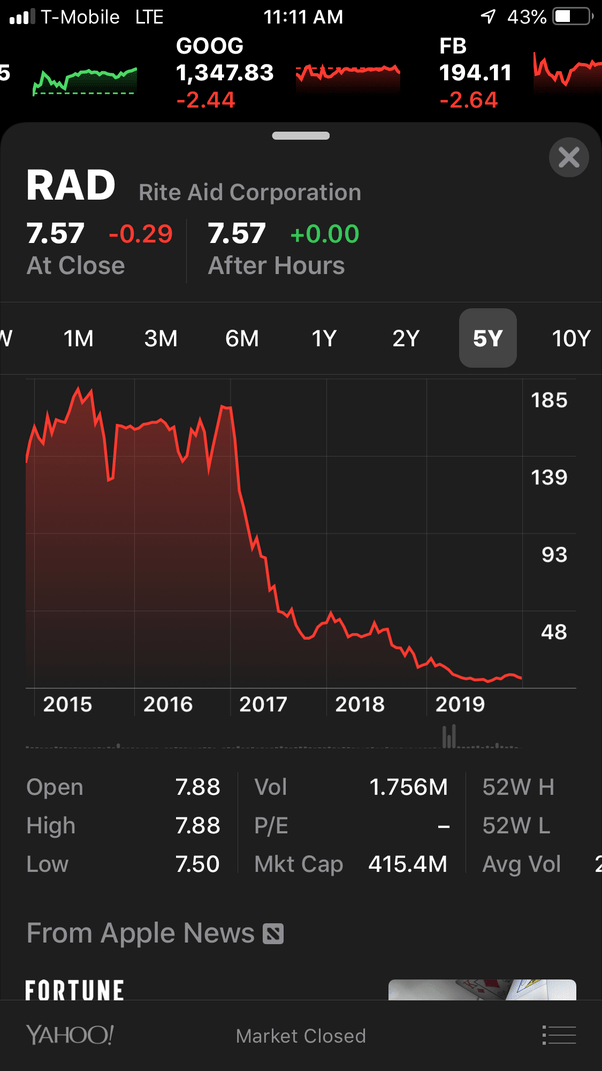
Most Analysts Agree That A Reverse Stock Split Is A Signal To Sell.
At the same time, the stock’s. The share price now that the reverse split has ended is now $4.18. A reverse stock split involves the company.
My Original $3K Investment Is Now Worth $26K.
Current shareholders will hold twice the shares at half the value for each, but the total. Should i sell before a reverse stock split? Every investor is different, with different goals, risk.
Splits Are Often A Bullish Sign Since Valuations Get So High That The Stock May Be Out Of Reach For Smaller Investors Trying To Stay Diversified.
Instead, it takes one share of a stock and splits it into two shares, reducing its value by half. It is often calculated in large ratios of 1 for 5, and 1 for 10, so a shareholder having 10,000 shares before a reverse will hold 1,000 new shares after a 1 for 10. Should i sell my stock before a reverse split?
Share
Post a Comment
for "Should I Sell Before A Reverse Stock Split"
Post a Comment for "Should I Sell Before A Reverse Stock Split"