Future Of Watt Stock. Watt's wireless charging technology is unlikely to reach commercial feasibility in the foreseeable future given lack of capital investment, regulatory barriers, and technology. Its value score of f indicates it would be a bad pick for value investors.
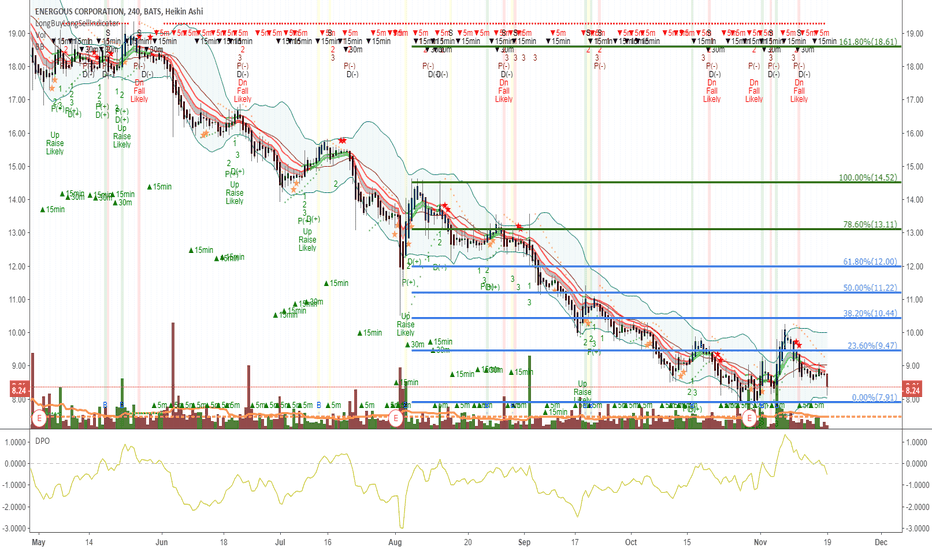
WATT Stock Price and Chart — NASDAQWATT — TradingView from www.tradingview.com The various types of stocks
Stock is an ownership unit in an organization. Stock is a fraction the total shares held by the corporation. Either you buy stock from an investment company or you purchase it yourself. Stocks are subject to fluctuation and are able to be utilized for a diverse variety of uses. Some stocks are cyclical and others aren't.
Common stocks
Common stocks are one form of equity ownership for corporations. These securities are usually issued as voting shares or ordinary shares. Ordinary shares are also referred to as equity shares outside of the United States. Common terms used for equity shares are also employed in Commonwealth nations. These are the simplest type of equity owned by corporations. They're also the most widely used form of stock.
Prefer stocks and common stocks have a lot in common. The major distinction is that preferred stocks have voting rights , whereas common shares do not. While preferred shares pay less dividends, they don't allow shareholders to vote. Thus, when interest rates rise or fall, the value of these stocks decreases. However, interest rates could fall and increase in value.
Common stocks also have greater potential for appreciation than other types. Common stocks are cheaper than debt instruments due to the fact that they don't have a set rate of return or. Common stocks like debt instruments are not required to make payments for interest. Common stocks are a great way for investors to share the success of the business and increase profits.
Preferred stocks
The preferred stocks of investors have higher dividend yields that common stocks. Like any other investment, they aren't completely risk-free. You must diversify your portfolio to include other securities. A way to achieve this is to invest in the most popular stocks through ETFs, mutual funds or other options.
The majority of preferred stocks do not have a maturity date however they can be redeemed or called by the company issuing them. The call date in most instances is five years following the date of the issuance. This kind of investment blends the best features of bonds and stocks. A bond, a preferred stocks pay dividends on a regular schedule. They also have set payment dates.
The preferred stocks could also be an a different source of financing that can be a benefit. One possibility is financing through pensions. Certain companies have the capability to hold dividend payments for a period of time without impacting their credit score. This provides companies with greater flexibility and gives them the freedom to pay dividends whenever they can generate cash. But, these stocks carry a risk of interest rates.
Stocks that aren't necessarily cyclical
A non-cyclical stock is one that does not undergo major changes in value due to economic trends. They are typically found in industries which produce the products or services that consumers want constantly. That's why their value is likely to increase in time. Tyson Foods is an example. They offer a range of meats. Investors will find these products to be a good investment because they are high in demand all year. Utility companies are another type of a noncyclical stock. These companies are stable, predictable and have a greater share turnover.
Trust in the customer is another crucial factor to consider when investing in non-cyclical stocks. Companies that have a high satisfaction score are typically the best options for investors. While some companies appear to have high ratings, feedback is often misleading and some customers may not get the best service. It is therefore important to choose firms that provide excellent customers with satisfaction and service.
Individuals who aren't interested in being subject to unpredicted economic cycles can make great investments in stocks that aren't cyclical. The price of stocks fluctuates, however non-cyclical stocks are more stable than other types of stocks and industries. They are sometimes referred to as defensive stocks as they shield the investor from the negative effects of the economy. Diversification of stocks that is non-cyclical can help you make steady profits, regardless of how the economy performs.
IPOs
IPOs are a type of stock offering in which companies issue shares in order to raise funds. Investors have access to these shares at a particular time. Investors who want to buy these shares must fill out an application form to take part in the IPO. The company determines how much money it needs and allocates these shares according to the amount needed.
IPOs can be high-risk investments that require careful focus on the finer details. Before making an investment in IPOs, it is important to evaluate the company's management and the quality, along with the details of every deal. The big investment banks are typically supportive of successful IPOs. But, there are potential risks associated with investing in IPOs.
An IPO can help a business raise enormous sums of capital. It also allows it to be more transparent which improves credibility and provides lenders with more confidence in its financial statements. This could result in lower borrowing rates. An IPO also rewards investors who hold equity. Investors who were part of the IPO can now sell their shares in the market for secondary shares. This will stabilize the price of shares.
In order to be able to seek funding through an IPO the company has meet the listing requirements set forth by the SEC and stock exchange. Once this is done then the company can begin marketing the IPO. The last step is the creation of a syndicate made up of investment banks and broker-dealers.
Classification of companies
There are many methods to classify publicly traded corporations. The stock of the company is one of the ways to classify them. There are two ways to purchase shares: common or preferred. The only difference is the amount of votes each share has. The former allows shareholders to vote in company meetings, whereas the latter allows shareholders to vote on specific elements of the business's operations.
Another approach is to separate businesses into various sectors. This is a good way for investors to find the most lucrative opportunities in specific industries and sectors. However, there are numerous aspects that determine if an organization is part of a particular sector. If a company suffers an extreme drop in its stock prices, it could influence the stock price of the other companies within its sector.
The Global Industry Classification Standard (GICS) and the International Classification Benchmark (ICB) systems categorize companies based on the products they produce and the services they provide. Companies that operate in the energy industry including the drilling and oil sub-industry, are classified under this group of industries. Companies in the oil and gas industry are included in the oil and gaz drilling sub-industries.
Common stock's voting rights
In the last few years, there have been several discussions about common stock's voting rights. A company can give its shareholders the ability to vote in a variety of ways. This debate prompted numerous bills both in the House of Representatives (House) as well as the Senate to be introduced.
The number of shares in circulation determines the voting rights for a company's common stock. The number of outstanding shares determines how many votes a corporation can get. For example 100 million shares will give a majority one vote. A company that has more shares than it is authorized will be able to exercise a larger voting power. This permits a company to issue more common shares.
Preemptive rights can also be obtained when you own common stock. These rights allow holders to keep a particular proportion of the shares. These rights are crucial as a corporation may issue additional shares and shareholders might want to purchase new shares to protect their ownership. It is crucial to keep in mind that common stock doesn't guarantee dividends, and corporations aren't required to pay dividends.
Stocks to invest
You can earn more on your money by investing in stocks rather than savings. Stocks allow you to buy shares of a business and can yield substantial dividends if the business is successful. They can be leveraged to boost your wealth. If you own shares of an organization, you can trade the shares at higher prices in the future , while getting the same amount that you originally put into.
Like any other investment the stock market comes with a certain level of risk. The level of risk that is appropriate to take on for your investment will be contingent on your personal tolerance and time frame. Investors who are aggressive seek to maximize returns at all costs, while conservative investors try to safeguard their capital. The moderate investor wants a consistent and high yield over a longer period of time, but they aren't confident about placing their entire portfolio in danger. A prudent investment strategy could cause losses. It is important to determine your level of comfort before you invest in stocks.
You can start investing in small amounts after you've decided on your level of risk. You should also research different brokers to determine which is the best fit for your needs. A reputable discount broker will provide tools and educational material. Some even provide robo advisory services to aid you in making an informed decision. Many discount brokers offer mobile applications with minimal deposits. Be sure to check the requirements and charges of any broker you're thinking about.
Watt's wireless charging technology is unlikely to reach commercial feasibility in the foreseeable future given lack of capital investment, regulatory barriers, and technology. Is $302.0, for 2027 sep. Participation from market makers and ecns is strictly voluntary.
Participation From Market Makers And Ecns Is Strictly Voluntary.
18, 2022 when the stock price was at 1.52$. On average, they predict the company's share price to reach $347.63 in the next year. Based on 1 wall street analysts offering 12 month price targets for energous in the last 3 months.
In The Short Term (2Weeks),.
As predicted, the carrot never arrived. Its value score of f indicates it would be a bad pick for value investors. Is $273.71, for 2026 sep.
Is $302.0, For 2027 Sep.
Watt stock was up 33.8% as of friday morning. The average price target is $1.90 with a high forecast of $1.90. I was just wondering what.
The Financial Health And Growth.
Watt's wireless charging technology is unlikely to reach commercial feasibility in the foreseeable future given lack of capital investment, regulatory barriers, and technology. Posted by 4 years ago. And as a result, “y” took place, and the stock fell more than.
Watt Stock Forecast Our Latest Prediction For Energous Corp's Stock Price Was Made On The Aug.
Moreover, energous corporation will report its fourth quarter and fiscal year 2020 financial results on feb. Is $271.04, for 2023 sep. Their wat share price forecasts range from $315.00 to $378.00.

Post a Comment for "Future Of Watt Stock"