Innd Stock Buy Or Sell. Innd quarterly revenue growth was 319.90%, higher than the industry and sector average revenue growth (10.76% and 7.51%,. Find out now with a free analysis on innd.
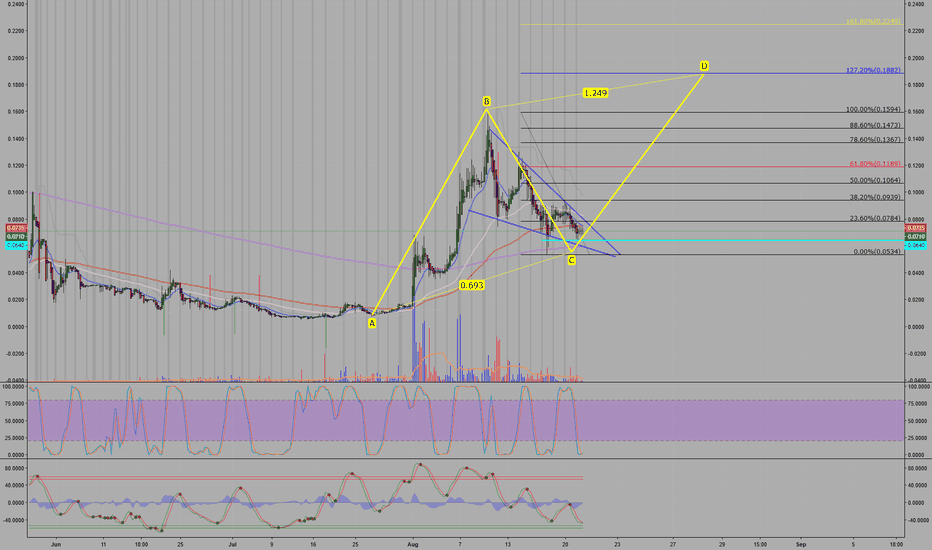
INND Stock Price and Chart — OTCINND — TradingView from www.tradingview.com The various types of stocks
Stock is a unit of ownership in the corporation. A single share of stock is just a tiny fraction of total shares of the corporation. Stocks can be purchased through an investment company, or you can purchase a share of stock by yourself. Stocks can fluctuate in price and can be used for various purposes. Some stocks can be not cyclical and others are.
Common stocks
Common stock is a form of corporate equity ownership. They are usually issued as ordinary shares or voting shares. Ordinary shares are typically referred to as equity shares in countries other than the United States. Commonwealth countries also use the expression "ordinary share" for equity shareholders. They are the most basic form for corporate equity ownership. They are also the most popular form of stock.
Common stock shares a lot of similarities with preferred stocks. Common shares are able to vote, while preferred stocks aren't. Preferred stocks have less dividends, however they do not give shareholders the privilege to vote. So, when interest rates rise and fall, they decrease. However, rates that fall can cause them to rise in value.
Common stocks have a higher potential to appreciate than other investment types. They offer lower returns than other types of debt, and they are also much less expensive. Common stocks don't have to pay investors interest unlike debt instruments. Common stocks can be the ideal way of earning higher profits and are a component of the success of a business.
Preferred stocks
Preferred stocks are investments with higher yields on dividends when compared to common stocks. But, as with all investments, they may be susceptible to risks. For this reason, it is essential to diversify your portfolio by purchasing different types of securities. One way to do this is to put money into the most popular stocks through ETFs mutual funds or other alternatives.
While preferred stocks usually don't have a maturation time, they are redeemable or can be called by the issuer. In most cases, the call date of preferred stocks is approximately five years after the issuance date. This type investment combines both the advantages of stocks and bonds. These stocks offer regular dividends as a bond does. They are also subject to fixed payment terms.
Preferred stocks have another advantage that they can be utilized to create alternative sources of capital for companies. One of these alternatives is pension-led financing. Companies are also able to delay dividend payments without having to affect their credit ratings. This provides companies with more flexibility, and allows them to pay dividends at the time they have enough cash. But, these stocks carry a risk of interest rates.
Stocks that do not enter the cycle
A non-cyclical company is one that does not undergo major change in value as a result of economic conditions. These stocks are most often located in industries that produce goods or services consumers require constantly. They are therefore more constant in time. Tyson Foods, for example sells a wide variety of meats. Investors will find these products to be a good investment because they are highly sought-after year round. Companies that provide utilities are another option of a stock that is not cyclical. These types companies are predictable and reliable, and are able to increase their share over time.
Trust in the customer is another crucial factor to consider when investing in non-cyclical stock. Investors tend to select companies that have high customer satisfaction rates. While some companies may seem to have a high rating however, the ratings are usually incorrect and customer service could be not as good. Businesses that provide excellent customers with satisfaction and service are essential.
Investors who aren't keen on being subject to unpredicted economic cycles can make great investment opportunities in stocks that aren't subject to cyclical fluctuations. While stocks are subject to fluctuations in price, non-cyclical stock outperforms the other types and sectors. Since they shield investors from the negative effects of economic events They are also referred to as defensive stocks. These securities can be used to diversify a portfolio and make steady profits regardless how the economy performs.
IPOs
Stock offerings are when companies issue shares to raise funds. The shares are then made available to investors on a certain date. Investors interested in buying these shares are able to fill out an application to be included as part of the IPO. The company determines how much funds they require and then allocates the shares in accordance with that.
IPOs require careful consideration of particulars. Before making a final decision, you should consider the management of your business along with the top underwriters, as well as the specifics of your offer. Large investment banks are generally supportive of successful IPOs. However, there are risks when investing in IPOs.
An IPO provides a company with the chance to raise substantial sums. It also allows financial statements to be more clear. This boosts the credibility of the company and provides lenders with more confidence. This can result in better borrowing terms. A IPO rewards shareholders of the company. Investors who participated in the IPO can now sell their shares in the market for secondary shares. This stabilizes the stock price.
To raise money through an IPO, a company must meet the listing requirements of the SEC (the stock exchange) as well as the SEC. Once it has completed this step, it can begin marketing the IPO. The final stage is the formation of an association of investment banks as well as broker-dealers.
Classification of businesses
There are many ways to classify publicly traded companies. The stock of the company is one way to classify them. You can choose to have preferred shares or common shares. The major difference between the shares is how many voting votes each one carries. The former lets shareholders vote in company meetings, while shareholders are able to vote on certain aspects.
Another way is to classify businesses by their industry. Investors who are looking for the best opportunities in particular industries or sectors may appreciate this method. There are many factors that can determine whether an organization is part of a certain area. For instance, a significant drop in stock prices can affect the stocks of other companies within that particular sector.
Global Industry Classification Standard (GICS), as well as the International Classification Benchmarks categorize companies based their products and/or services. For example, businesses that are in the energy industry are included in the energy industry group. Oil and gas companies are classified under the oil and gas drilling sub-industry.
Common stock's voting rights
There have been numerous discussions about the voting rights for common stock over the past few years. There are many reasons a business could give its shareholders the right to vote. This has led to a variety of legislation to be introduced in both Congress and Senate.
The number outstanding shares determines the voting rights to the common stock of a company. A company with 100 million shares can give the shareholder one vote. If the number of shares authorized are exceeded, each class's voting ability will increase. This means that the company is able to issue additional shares.
Preemptive rights are also possible when you own common stock. These rights permit the owner to keep a particular percentage of the stock. These rights are important since a corporation can issue additional shares and shareholders could want new shares in order to maintain their ownership. Common stock, however, is not a guarantee of dividends. Corporations do not have to pay dividends.
The stock market is a great investment
You could earn higher returns on your investment in stocks than you would using a savings account. Stocks are a great way to purchase shares in a business and can result in substantial returns if the company succeeds. You can also make money through stocks. If you own shares in an organization, you can trade the shares at higher prices in the future while still getting the same amount that you initially invested.
Investment in stocks comes with risks. The level of risk you're willing to take and the amount of time you plan to invest will be determined by your tolerance to risk. Investors who are aggressive seek to increase returns at every costs, while conservative investors try to protect their capital. Investors who are moderately minded want an unrelenting, high-quality yield over a long period of time but aren't willing to put all their capital. Even a conservative investing strategy can result in losses which is why it is crucial to establish your level of confidence prior to investing in stocks.
After you have determined your risk tolerance, you can make small investments. It is also possible to research different brokers and find one that is suitable for your needs. A reputable discount broker will provide tools and educational material. Some might even provide robo advisory services to help you make informed decision. Discount brokers can also provide mobile appswith no deposit requirements. However, it is essential to verify the fees and requirements of each broker.
The opinions takes up to 5 years' worth of historical data and. Share your opinion and gain insight from other stock traders and. The stock also shows resistances near.0198,.0250, and.0299.
Find Out If You Should Buy Innd Stock.
You'll find the innerscope advertising agency share forecasts, stock quote and buy / sell signals below. 2151 professional drive, second floor. Find out now with a free analysis on innd.
Find The Latest Innerscope Hearing Technologies, Inc.
The current innerscope hearing technologies [ innd] share price is $0.0160. Change the date range, see whether others are buying or selling, read news, get earnings. Innd stock is currently trading at $.0183 and has supports.0172,.0150,.0130, and.0100.
28 Rows About The Innerscope Hearing Technologies, Inc Stock Forecast.
Should i buy or sell innd? Generally, the target price of innerscope depends on its intrinsic valuation, beta (i.e., risk over market), and overall volatility. The stock also shows resistances near.0198,.0250, and.0299.
(Innd) Stock Discussion In Yahoo Finance's Forum.
Share your opinion and gain insight from other stock traders and. View the latest news, buy/sell ratings, sec filings and insider transactions for your stocks. Why should i sell innd.
The Company Operates Retail Hearing Device Clinics In California.
The score for innd is 63, which is 26% above its historic median score of 50, and infers lower risk than normal. Wall street stock market & finance report, prediction for the future: Find the latest innerscope hearing technologies, inc.

Post a Comment for "Innd Stock Buy Or Sell"