Mro Stock Reverse Split. Mro) underwent a total of 4 stock splits. This means that someone holding, say, 1,000 shares at 40 cents each would.
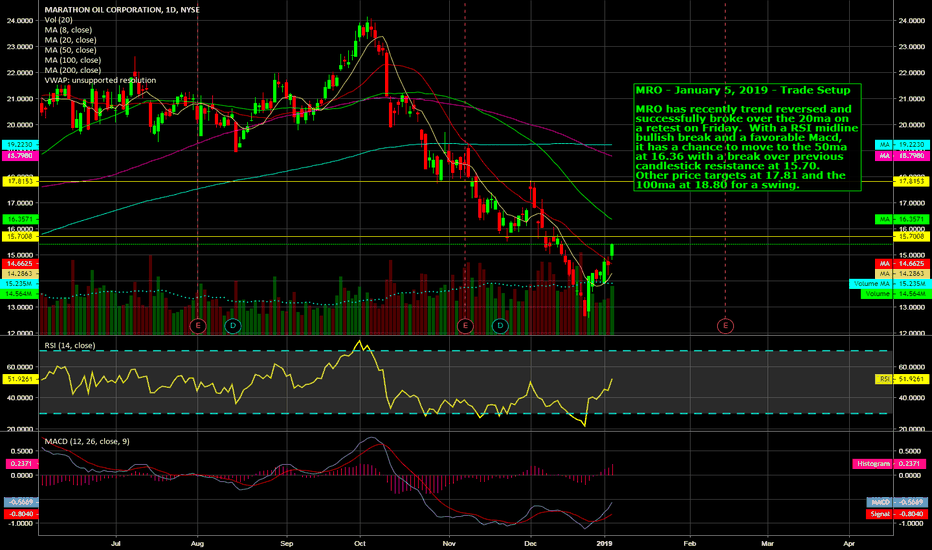
MRO Stock Price and Chart — NYSEMRO — TradingView from www.tradingview.com The Different Types and Types of Stocks
A stock represents a unit of ownership in a company. A fraction of total corporation shares can be represented by a single stock share. You can either purchase shares from an investment firm or purchase it yourself. Stocks can be volatile and can be utilized for a broad variety of uses. Some stocks are cyclical and others aren't.
Common stocks
Common stocks is a form of equity ownership in a company. These securities can be issued as voting shares or regular shares. Ordinary shares are also known as equity shares outside the United States. To refer to equity shares in Commonwealth territories, ordinary shares is also used. They are the most basic way to describe corporate equity ownership. They're also the most well-known kind of stock.
Common stock has many similarities to preferred stocks. The main difference is that preferred stocks are able to vote, while common shares don't. Preferred stocks have lower dividend payouts, but don't give shareholders the right to vote. Therefore, if the interest rate increases, they'll decrease in value. But, if rates drop, they will increase in value.
Common stocks are also more likely to appreciate than other kinds of investment. They also have a lower return rate than debt instruments, and are also more affordable. Common stocks do not have to pay investors interest, unlike the debt instruments. Common stocks are a fantastic investment option that can allow you to reap the benefits of greater returns and help to ensure the growth of your business.
Preferred stocks
Preferred stocks offer greater dividend yields than common stocks. They are just like other kind of investment, and can pose risks. This is why it is essential to diversify your portfolio by purchasing different kinds of securities. One way to do that is to purchase preferred stocks from ETFs or mutual funds.
While preferred stocks generally do not have a maturity time frame, they're available for redemption or could be redeemed by their issuer. The call date in most cases is five years after the date of issuance. This combination of bonds and stocks can be a good investment. Similar to bonds preferred stocks give dividends on a regular basis. In addition, preferred stocks have specific payment terms.
Another benefit of preferred stocks is their capacity to provide businesses a different source of financing. An example is pension-led finance. Certain companies are able to postpone dividend payments without affecting their credit scores. This provides companies with greater flexibility and permits them to pay dividends if they are able to generate cash. The stocks are susceptible to risk of interest rates.
Non-cyclical stocks
A stock that isn't cyclical is one that does not see significant changes in its value because of economic developments. These stocks are generally found in industries that supply products or services that customers use continuously. Their value increases in time due to this. To illustrate, take Tyson Foods, which sells various meats. These products are a preferred choice for investors due to the fact that consumers are always in need of them. Companies that provide utilities are another good example of a non-cyclical stock. These kinds of companies are predictable and stable , and they will also increase their share turnover over years.
The trust of customers is another aspect to be aware of when investing in non-cyclical stocks. Investors tend to pick companies with high satisfaction ratings. Although companies can seem to have a high rating however, the results are often false and some customers might not receive the best service. It is therefore important to look for firms that provide excellent the best customer service and satisfaction.
Stocks that aren't subject to economic fluctuations can be a good investment. Even though stocks may fluctuate in value, non-cyclical stocks is more profitable than other kinds and sectors. They are commonly referred to as "defensive" stocks as they shield investors from negative economic effects. In addition, non-cyclical stocks diversify a portfolio and allow you to earn steady profits no matter what the economic situation is.
IPOs
IPOs, or shares which are offered by a business to raise funds, is a type of stock offering. Investors can access these shares at a certain date. Investors who wish to purchase these shares should fill out an application form to participate in the IPO. The company decides how much cash it will need and then allocates the shares according to that.
IPOs require that you pay careful attention to the details. Before you make a choice, you should be aware of the management style of the company and the quality of the underwriters. Large investment banks are usually favorable to successful IPOs. There are risks when investing in IPOs.
A IPO is a method for companies to raise massive amounts capital. It allows the company to become more transparent and improves credibility and lends more confidence to the financial statements of its company. This can result in lower borrowing rates. An IPO is a reward for shareholders of the company. Investors who were part of the IPO can now sell their shares on the market for secondary shares. This helps stabilize the price of shares.
To be eligible to solicit funds through an IPO, a company needs to meet the requirements for listing set out by the SEC and stock exchange. After the requirements for listing have been satisfied, the business is legally able to launch its IPO. The final stage of underwriting is the creation of a group of investment banks and broker-dealers that can purchase the shares.
The classification of companies
There are numerous ways to categorize publicly traded businesses. Stocks are the most common way to categorize publicly traded companies. Shares can be either common or preferred. The major distinction between them is the number of voting rights each share carries. The former allows shareholders to vote at company meetings, while shareholders are able to vote on specific aspects.
Another approach is to classify firms by sector. Investors seeking the best opportunities in certain industries or sectors may find this approach advantageous. There are numerous factors that can determine whether a company belongs in the same area. If a company experiences significant declines in its price of its stock, it may have an impact on the stock prices of other companies within the sector.
Global Industry Classification Standard(GICS) or International Classification Benchmarks (ICB) Both methods assign companies based on their products and the services they provide. Companies that operate in the energy industry like the oil and gas drilling sub-industry are included in this group of industries. Oil and natural gas companies are included as a sub-industry for oil and gas drilling.
Common stock's voting rights
A lot of discussions have occurred throughout the years regarding voting rights for common stock. The company is able to grant its shareholders the ability to vote in a variety of ways. The debate has led to several bills to be introduced in the House of Representatives and the Senate.
The rights to vote of a company's common stock is determined by the number of shares outstanding. A company with 100 million shares can give you one vote. If a business holds more shares than is authorized then the voting rights of each class is likely to be increased. So, companies can issue more shares.
Common stock can also be accompanied by preemptive rights that allow the owner of a certain share to keep a certain portion of the company's stock. These rights are crucial because corporations may issue more shares. Shareholders might also wish to buy shares from a new company to retain their ownership. Common stock is not a guarantee of dividends, and companies are not required by shareholders to make dividend payments.
Investment in stocks
Investing in stocks will allow you to earn greater returns on your money than you would in savings accounts. Stocks allow you to buy shares of companies , and they can yield substantial profits when they're successful. Stocks also allow you to leverage your money. You can also sell shares of an organization at a higher cost, but still get the same amount as when you first invested.
Stocks investment comes with risk. The appropriate level of risk to take on for your investment will depend on your level of tolerance and the time frame you choose to invest. The most aggressive investors seek to maximize their returns at any costs, while conservative investors try to safeguard their capital. Moderate investors are looking for a steady, high yield over a long period of time but don't want to put all their funds. A cautious approach to investing can lead to losses. Before investing in stocks, it's essential to establish the level of confidence you have.
Once you know your risk tolerance, it is feasible to invest small amounts. It is important to research the various brokers and decide which one suits your needs the best. A good discount broker must offer educational tools and tools as well as robot-advisory to help you make informed decisions. A few discount brokers even provide mobile apps. Additionally, they have lower minimum deposits required. But, it is important to confirm the fees and requirements of each broker.
It is typically based on a predetermined ratio. The first split for mr took place on july 15, 1997. Stock split history for marathon oil (mro) marathon oil stock (symbol:
A Marathon Oil Stock Split Is No Different Than Any Other Stock Split.
17 brokers have issued 12 month price targets for marathon oil's stock. Marathon oil is simply packaging the number of outstanding shares in a different way. Encr), the world’s only provider of commercialized power oxidation technology and
A reverse stock split happens when a corporation's board of directors decides to reduce the outstanding share count by replacing a certain number of them with a smaller. For example, if a company declares a. Stock split history for marathon oil (mro) marathon oil stock (symbol:
A Reverse Stock Split Is A Type Of Corporate Action That Aims To Reduce A Company’s Overall Number Of Shares Available On The Market.
The process works as the exact opposite of. Mengamankan posisi di pasar modal. When a company completes a reverse stock split, each outstanding share of the company is converted into a fraction of a share.
Mro | Complete Marathon Oil Corp.
The most recent stock split occured on july 1st, 2011. On average, they predict the company's. Marathon oil (mro) has 4 splits in our marathon oil stock split history database.
Marathon Oil Corporation Is A Leading Oil And Natural Gas Exploration And Production Company With Operations In The United States.
A reverse stock split, as opposed to a stock split, is a reduction in the number of a company’s outstanding shares in the market. This was a 2 for 1 split, meaning for each share of mro. A reverse stock split involves the company.

Post a Comment for "Mro Stock Reverse Split"