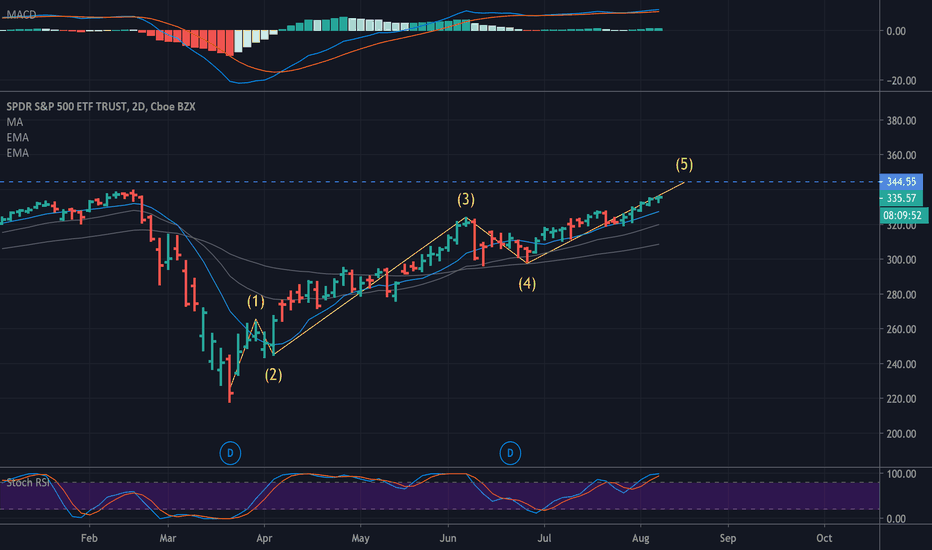
Spy Stock Trading View. Far too many traders enter the options market with a naive dream of striking it rich. This was an experimental script that seems to be.
SPY Stock Price and Chart — AMEXSPY — TradingView — UK from uk.tradingview.com The Different Types of Stocks
A stock is a unit of ownership in a corporation. A stock represents only a tiny fraction of shares in a corporation. You can purchase stock via an investment company, or buy it on behalf of the company. Stocks are used for a variety of purposes and their value may fluctuate. Some stocks are cyclical and other are not.
Common stocks
Common stocks is one type of corporate equity ownership. These securities are usually issued as ordinary shares or voting shares. Ordinary shares, also referred to as equity shares, can be used outside of the United States. Commonwealth realms also use the term ordinary share to refer to equity shares. They are the simplest and popular form of stock, and they also constitute corporate equity ownership.
Common stocks have many similarities with preferred stocks. The only difference is that preferred shares are able to vote, whereas common shares do not. The preferred stocks pay less dividends, however they don't give shareholders the right of voting. Accordingly, if interest rate increases, they'll decrease in value. If interest rates fall, they increase in value.
Common stocks have a higher potential to appreciate than other investment types. They offer a lower return rate than other types of debt, and they are also more affordable. Common stocks unlike debt instruments, are not required to make payments for interest. Common stocks can be a great way of getting more profits and being a element of a company's success.
Preferred stocks
These are stocks that offer higher dividend yields than ordinary stocks. However, as with all investments, they can be susceptible to risks. Diversifying your portfolio by investing in various types of securities is essential. It is possible to buy preferred stocks through ETFs or mutual funds.
Stocks that are preferred don't have a date of maturity. However, they are able to be purchased or exchanged by the issuing company. Most times, this call date is approximately five years from the issuance date. This kind of investment blends the advantages of the bonds and stocks. The preferred stocks are like bonds that pay dividends each month. Additionally, you can get fixed-payout and terms.
The preferred stocks could also be an another source of funding that can be a benefit. Funding through pensions is one option. Furthermore, some companies can postpone dividend payments without damaging their credit rating. This allows them to be more flexible in paying dividends when it is possible to make cash. However, these stocks may be exposed to interest-rate risks.
Non-cyclical stocks
Non-cyclical stocks are those that don't experience significant price fluctuations in response to economic changes. They are usually found in industries that provide goods and services that consumers demand constantly. Their value grows in time due to this. Tyson Foods sells a wide variety of meats. These kinds of products are very popular throughout the year and make them a good investment choice. Companies that provide utilities are another type of a stock that is non-cyclical. These types of companies have a stable and reliable structure, and grow their turnover of shares over time.
Another important factor to consider when investing in non-cyclical stocks is the level of customer trust. Companies with a high customer satisfaction rating are generally the best options for investors. While some companies might appear to be highly rated however, the reviews are often misleading, and customers may encounter a negative experience. Therefore, it is crucial to look for firms that provide excellent the best customer service and satisfaction.
Stocks that are not affected by economic changes could be an excellent investment. Non-cyclical stocks even though the prices of stocks can fluctuate a lot, outperform all other types of stocks. They are often called "defensive" stocks since they shield investors from negative effects on the economy. Furthermore, non-cyclical securities diversify a portfolio, allowing you to make steady profits no matter what the economic situation is.
IPOs
IPOs, which are the shares that are issued by a company to raise funds, are a type of stock offering. These shares are made available to investors on a certain date. Investors looking to purchase these shares should complete an application to take part in the IPO. The company decides on the amount of cash they will need and distributes these shares accordingly.
IPOs are an investment that is complex that requires careful consideration of every detail. Before making a decision you must be aware of the management style of the business and the credibility of the underwriters. Large investment banks typically support successful IPOs. But, there are also risks associated with investing in IPOs.
A IPO is a way for companies to raise massive amounts capital. This allows the company to be more transparent, which enhances its credibility and adds confidence to its financial statements. This could result in lower borrowing rates. Another benefit of an IPO is that it benefits stockholders of the business. Investors who participated in the IPO are now able to sell their shares in the market for secondary shares. This helps stabilize the price of shares.
An IPO requires that a company comply with the listing requirements of the SEC or the stock exchange in order to raise capital. Once the listing requirements are met, the company is eligible to market its IPO. The final step of underwriting is the creation of a syndicate consisting of broker-dealers and investment banks who can buy shares.
Classification of companies
There are several methods to classify publicly traded companies. The stock of the company is just one of them. Shares may be common or preferred. The primary difference between them is the amount of voting rights each share carries. The former grants shareholders the ability to vote at the company's annual meeting, whereas the second gives shareholders to vote on specific issues.
Another option is to classify firms by sector. This is a useful method to identify the most lucrative opportunities in specific sectors and industries. There are numerous variables that determine whether a company belongs in a certain sector. For instance, a major decrease in stock prices could negatively impact stocks of other companies within that particular sector.
The Global Industry Classification Standard (GICS) and the International Classification Benchmark (ICB) systems categorize companies based on the products they produce and the services they provide. Companies operating within the energy sector like the oil and gas drilling sub-industry, fall under this industry group. Oil and gas companies are part of the drilling and oil sub-industries.
Common stock's voting rights
The voting rights for common stock have been subject to a number of debates over the many years. The company is able to grant its shareholders the ability to vote for many reasons. This has led to a variety of bills to be presented in both the Senate and in the House of Representatives.
The value and quantity of shares outstanding determine which shares have voting rights. A company with 100 million shares will give you one vote. However, if a company has a higher quantity of shares than the authorized number, the voting power of each class is increased. Thus, companies are able to issue more shares.
Common stock can also include preemptive rights which allow the owner of a single share to keep a portion of the stock owned by the company. These rights are important because a business could issue more shares or shareholders might wish to purchase new shares in order to maintain their shares of ownership. It is essential to note that common stock doesn't guarantee dividends and corporations don't have to pay dividends.
How To Invest In Stocks
You can earn more from your investments through stocks than with a savings accounts. Stocks can be used to purchase shares of the company, and can generate significant gains if it is successful. They also let you make money. Stocks let you sell your shares at a higher market price, and still make the same amount of the money you put into it initially.
Investment in stocks comes with risks, as does every other investment. Your tolerance to risk and the time frame will allow you to determine what level of risk is appropriate for your investment. Investors who are aggressive seek to increase returns at every expense, while conservative investors strive to safeguard their capital. Moderate investors desire a stable, high-quality return over a long duration of time, but don't wish to put their money at risk. capital. A conservative investing strategy can be a risk for losing money. Therefore, it is essential to determine your level of comfort before making a decision to invest.
Once you've established your risk tolerance, you can start investing smaller amounts. It is essential to study the various brokers that are available and decide which one suits your needs the best. You will also be able to access educational materials and tools from a reputable discount broker. They may also provide robo-advisory services that will help you make informed choices. Discount brokers can also provide mobile applications, which have no deposits required. It is crucial to verify all fees and requirements before making any decision regarding the broker.
I think we move up.will watch for some retrace entries Trend analysis technical indicators bias daytrading stocks watchlist tradeidea gap. This was an experimental script that seems to be.
View The Latest Etf Prices And News For Better Etf Investing.
Rooms rankings earnings newsletters shop. Spdr s&p 500 etf trust ( amex:spy ) jlaing premium 28 minutes ago. And fridays close trapped two days worth of sellers.
Correctional Movement Failed To Break The Local Support, We Expect Resumption Of Buying To Resistance.
Price has been expanding , day by day, since wed. I think we move up.will watch for some retrace entries Investing in spy in oct 7th 2022 after a 27 percent fall.
This Is A 1 Trade Per Day Strategy For Trading Spy Or Qqq Index.
This was an experimental script that seems to be. First of all, you need to have knowledge about options. You need both theoretical and.
If You Like The Idea, Mark It.
Fibonacci levels, key ema, and uptrend channel off lows s&p 500 (spx) has bounced hard off its lows on october 13, 2022,. But this strategy can be risky, since losses on short positions in stocks, etfs, or. Shares of ups and gm rose in early trading, but 3m dipped 1.6%.
Spy Fund Summary The Investment Seeks To Provide Investment Results That, Before Expenses, Generally Correspond To The Price And Yield Performance Of The S&P 500 Index.
(click on the report tab on the top right of a live trade card to see this data in the theoretical value analysis section.). The historical data shows that, over a 4 day period, spy. Squishtrade pro+ updated oct 21.

Post a Comment for "Spy Stock Trading View"